Intelligent Supply Sensing
- Problem —
- COE managers couldn’t see risk beyond tier-one suppliers, so disruptions surfaced only after hitting production.
- Solved by —
- An AI/ML platform that scores risk across every supplier tier and carries each alert through to a closed case.
- Impact —
- COE managers can spot, investigate, and mitigate supply risk before it disrupts operations.
- Role
- Sole UX/UI Designer
- Client
- Deloitte (end client under NDA)
- Deliverables
- Research, Information architecture, Wireframes, Journey maps, Interactive prototype
Process
01Discover
Turned a year of consultant research, SME input, and COE manager interviews into the critical data points behind every risk decision.
02Define
Ran a product-thinking workshop on COE managers’ jobs-to-be-done, cutting scope to only the features that prevent disruption.
03Design
Prototyped the full loop—risk dashboard, AI-scored alerts, exposure maps, and case management—so every alert leads to an action.
04Test
Client demos walked the flow from risk alert to closed case, driving sub-domain risk views, advanced filtering, case metrics, and alert onboarding.
Key decisions
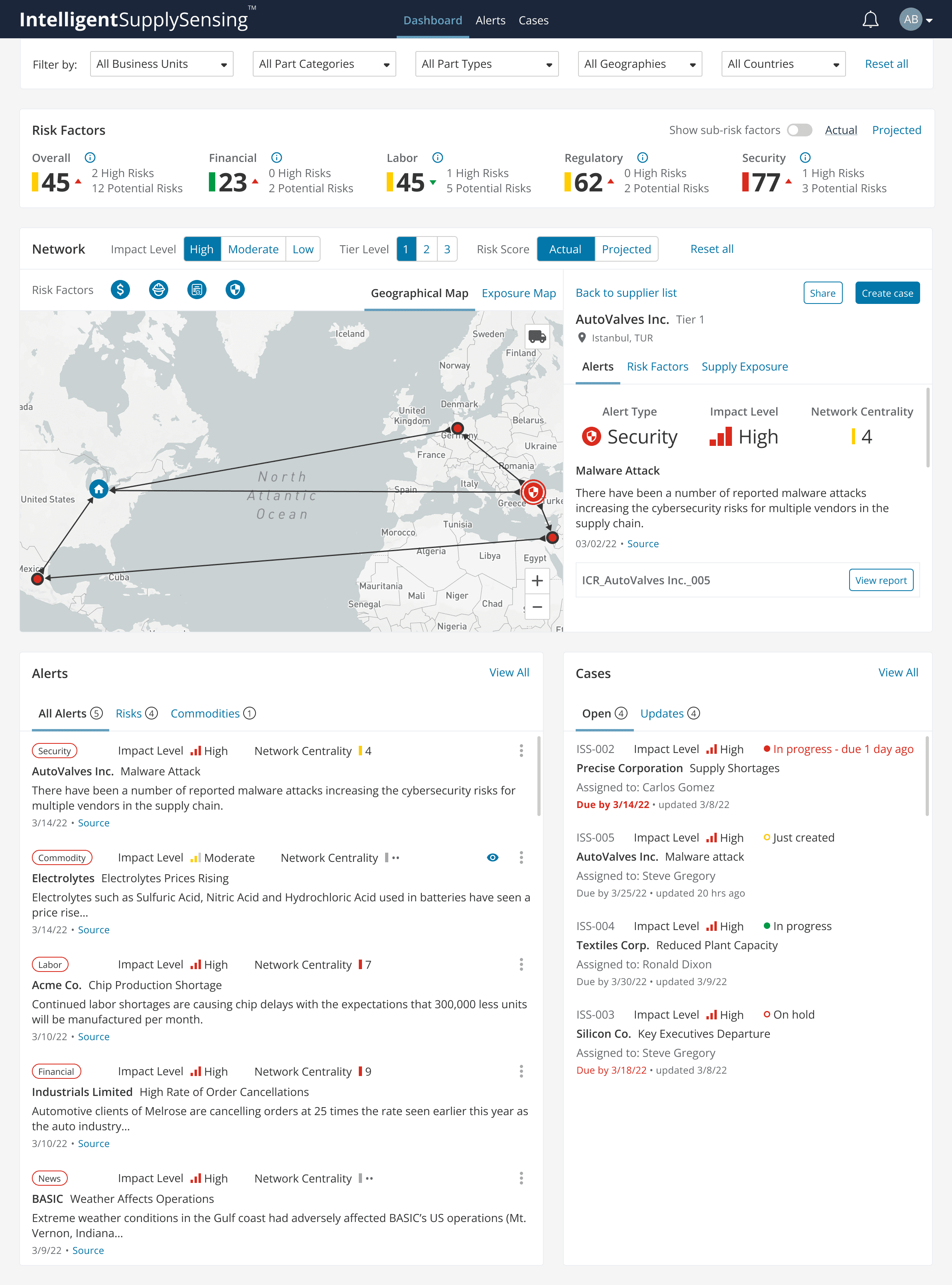
- AFive risk domains scored up front, so managers see where exposure is rising before opening a report
- BCreate case sits on every supplier, turning an alert into a tracked mitigation in one step
- CAlert detail opens beside the map, so triage never loses sight of the network
- DSupply paths drawn from the alert back to home show how far a disruption could travel
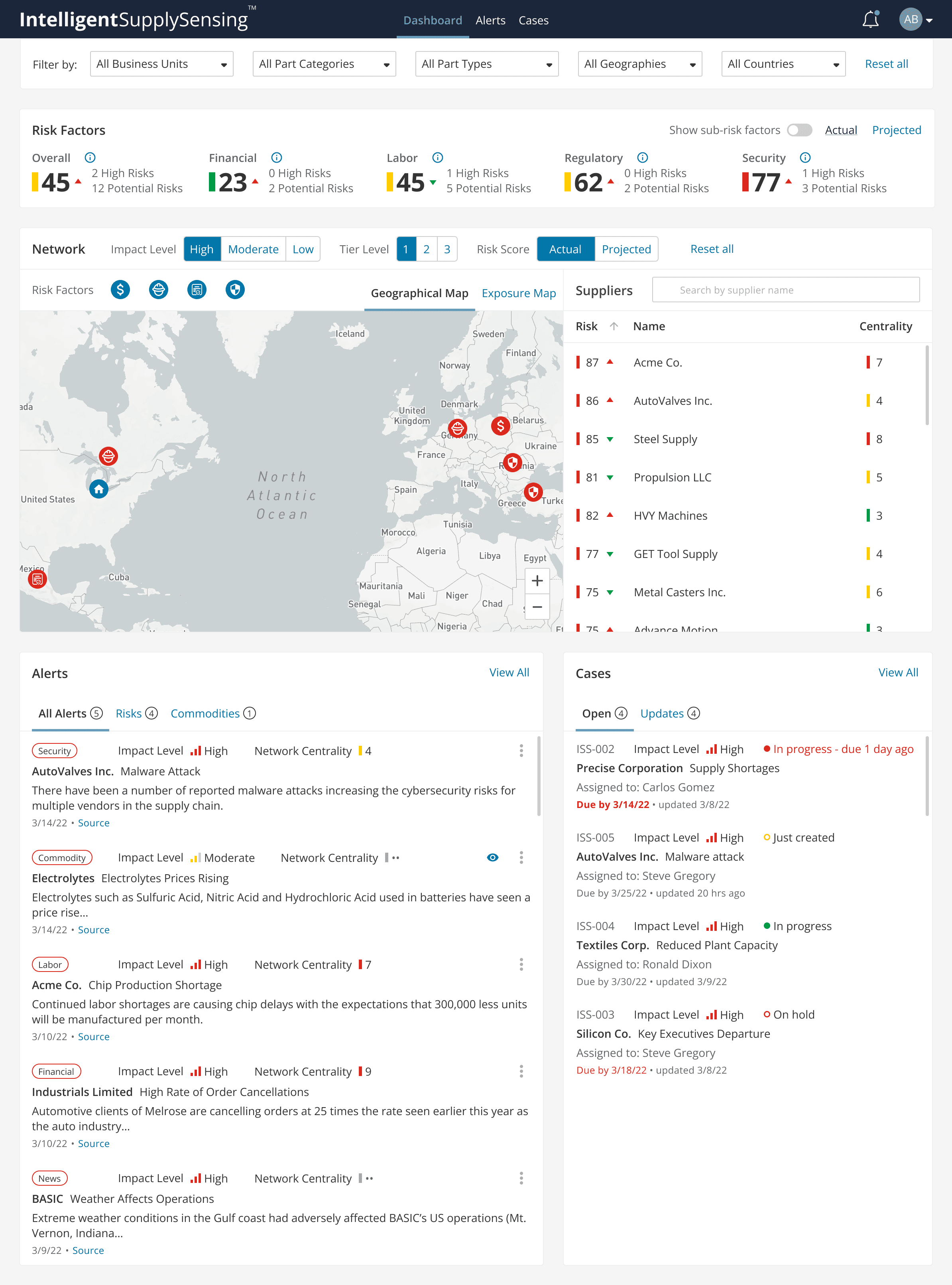
- AFilters added after client demos narrow a global network to the suppliers that need attention now
- BSuppliers ranked by risk, with network centrality beside each score to show who the network depends on most
- CRisk-type icons on every pin let managers read the kind of threat before the details
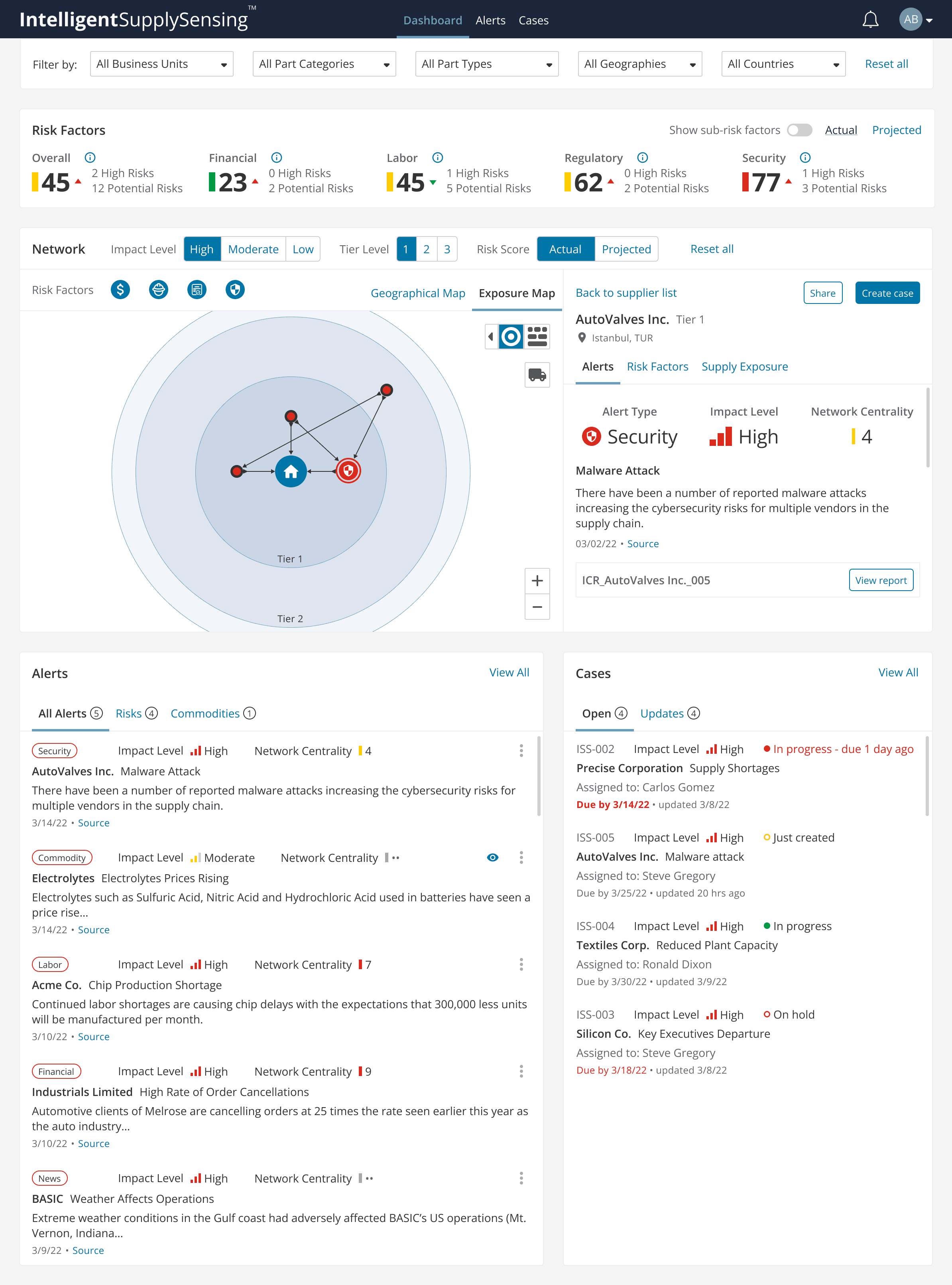
- ARadial and stacked views toggle in place: one shows scale, the other dependency chains
- BConcentric rings place suppliers by tier, so cascading exposure reads as distance from home
- CThe alerted supplier is flagged in place, showing exactly which tiers it touches
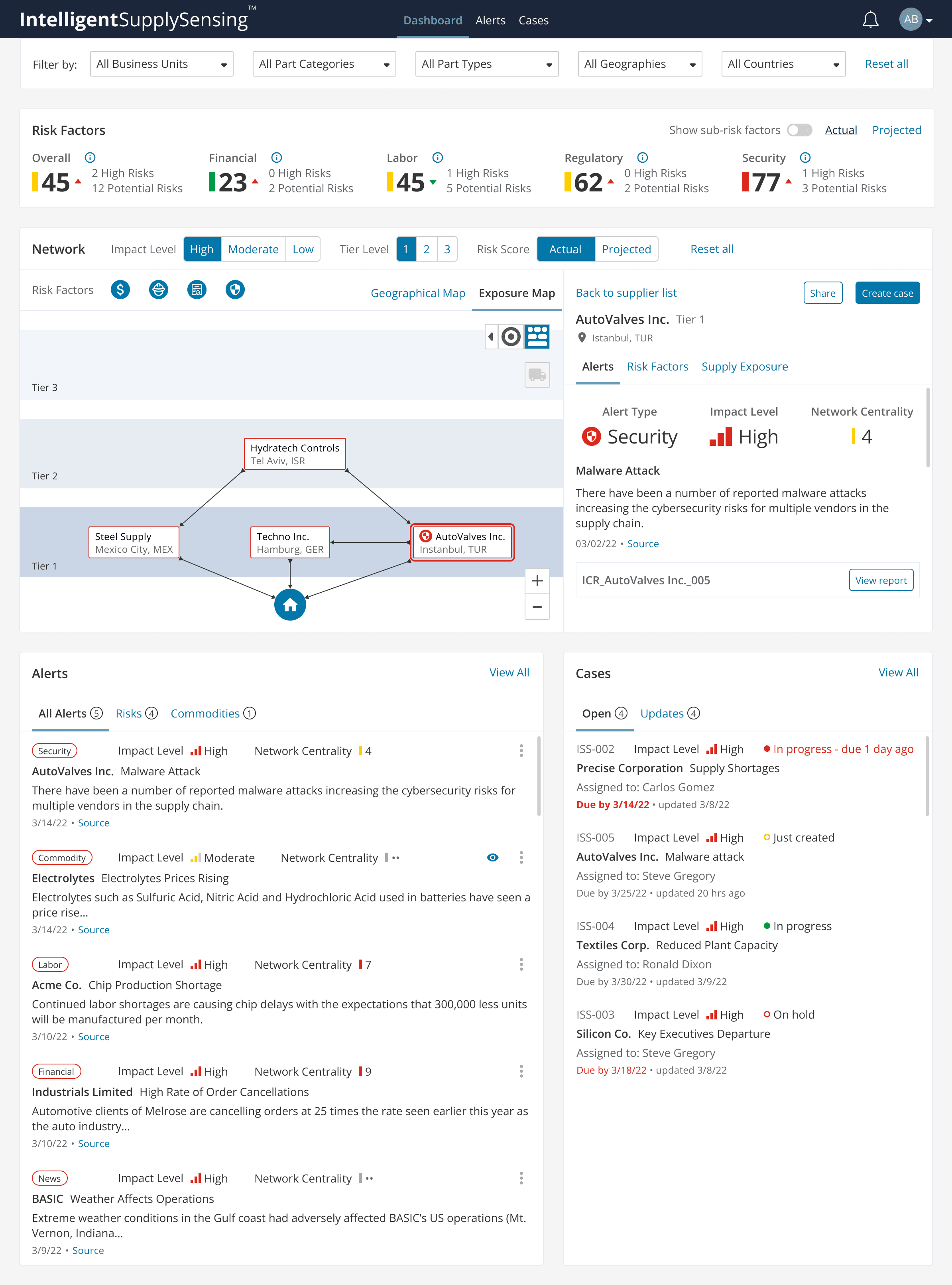
- ATiers stack into bands, making each dependency chain traceable from raw supplier to home
- BThe alerted supplier is outlined in red within its tier, so impact analysis starts at the source
- CThe home node anchors every path, answering the core question: how does this reach us?
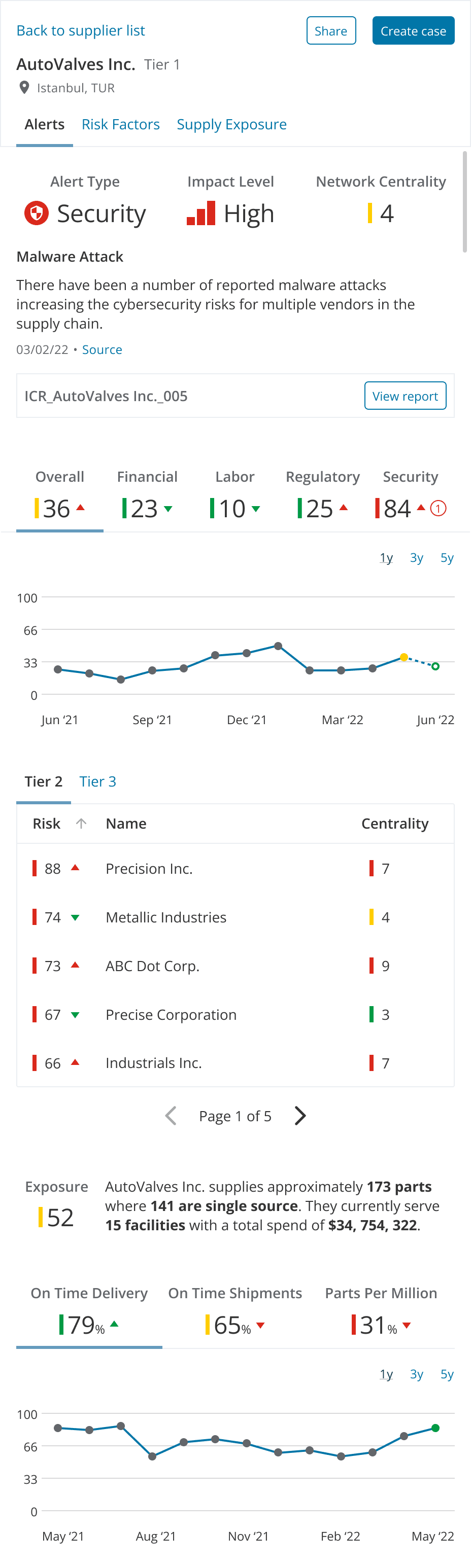
- AThe security score is flagged where the alert originates, tying the warning to its evidence
- BProjected risk extends as a dashed line, so managers can act before the score peaks
- CTier 2 suppliers ranked by risk and centrality expose hidden dependencies one level down
- DExposure summarized in plain language, ready to share with stakeholders without interpretation
What research showed
- 01
Risk hidden beyond tier one made disruptions impossible to anticipate; managers needed visibility across the whole network.
- 02
Consolidating data from many sources by hand led to oversights and delays, so analysis had to happen for them.
- 03
Mitigation stalled on fragmented communication and missing guidance, so cases needed a structured, shared path.
Outcomes
6 months
Zero to MVP as the sole designer, alongside a PM and SMEs
Early warning
AI/ML risk scoring across every tier turned reactive firefighting into proactive mitigation
Continuity
Disruptions contained before they reach production and operations, strengthening supply chain resilience